Thursday, June 20, 2013

Will spring arrive?


On my first day after leaving Berlin, I met a Japanese cycle tourist also heading for Poland. An artist by profession, he had been cycling for 15 years and was planning on parking his bike for good in October this year. After admiring the simplicity of his cycling rig, I was again reminded that one does not need the latest gear to cycle tour, but just the desire to get out there and do it!

Japanese touring cyclist south of Berlin, heading for Poland to meet with a friend.

I pushed hard to get through the south-west corner of Poland in two days. While it did not snow again, there was enough left on the ground to make it look like mid-winter. The landscape certainly looked more intimidating than it had in Germany, and was also more hilly. There was no end to the snow when I entered Czech Republic, and I was beginning to wonder if spring would actually arrive. But then it all changed rather rapidly. Within the same morning, the snow-coated landscape slowly dissolved into one boasting fields with new green growth. By the time I reached Zábřeh, snow had become something of the past. It was also here that I was fortunate to meet Petr. Petr was on his way back to the local table tennis championships when he noticed me gleaning an information board for directions. A quick cup of tea at his house ended up in us playing a game of table tennis – a completely unexpected turn of events! Petr kindly hosted me for the night, while his friends generously served us dinner at their home. Although Petr is handicapped, he has cycled over 20 000 kilometres across Europe, including countries such as Spain, Turkey, Italy, France, Croatia and Greece to name a few. He was a real inspiration and I hope his plans to cycle Scandinavia materialise soon… 

Little birding was done as I pushed through Poland, hoping for spring to arrive.

Making friends in Czech Republic, with Petr on the right.

Soon after departing from Zábřeh, I got my first Little Ringed Plover on an open field, followed by a pair of Garganey in the company of Mallards. The occasional woodland that I passed had drumming Great Spotted Woodpeckers; an impressive sound made by pecking rapidly at resonating wood. There was no shortage of good birds as I passed from Czech Republic to Slovakia, with Linnet, Crested Lark, Black Redstart, Marsh Harrier, Great Crested Grebe, Green Woodpecker and Eurasian Serin making an appearance. I was pleased with my first Great Grey shrike, Hawfinch and Middle-spotted Woodpecker as I approached the impressive floodplain of the Morava River in western Slovakia. It was also great getting views of species which I had not had the pleasure of seeing for a while, such as Grey-headed Woodpecker, Reed Bunting, Dunnock, Marsh Tit and Stonechat. While the floodplain seemed relatively quiet at the time, I got glimpses of large flocks of waterfowl occupying the inaccessible stretches of water; the area obviously has huge potential given more time. 

Little Ringed Plover in Czech Republic; with diagnostic yellow eye-ring and black beak.


The mornings were frosty in Czech Republic, but new growth was evidence of spring!

I reluctantly left the Morava River floodplain and pushed on through to the city of Bratislava, from where I would make my entry into Hungary. My first day in Hungary was rather uneventful, but it did lead to a one-day detour into Austria to explore the Neusiedlersee and surrounding wetlands. I passed the lowest point in Austria, and appreciated the fact that it was a lot less work getting there by bike as opposed to the highest point in the country! 

The lowest point in Austria; easy to reach by bike!

The wetlands held a good diversity of waterfowl, with species such as Mallard, Gadwal, Common Pochard, Northern Shoveler, and Red-crested Pochard being common. Twice I had a small group of Ferruginous Duck fly overhead, but the views were not satisfactory enough to add the species to my life list. I tried for Moustached Warblers in the extensive reedbeds surrounding the Neusiedlersee, but had no luck. I figured it was perhaps still too early, as even common warblers were not around. I was amazed at the number of Marsh Harriers patrolling the reedbeds; at one point I could see 11 different individuals gliding over the reedbeds across a stretch of only a few kilometres! 

The striking Red-crested Pochard, seen here at a shallow wetland near Neusiedlersee.


Taking the ferry ride across the Neusiedlersee, Austria.


A Common Gull trailing the ferry ride across the Neusiedlersee.

Back in Hungary, I got my first Syrian Woodpecker in the town of Sarród, while the wetlands at Fertőújlak delivered great views of Black-tailed Godwit, Black-winged Stilt, Ruff, Common Shelduck, Gadwal, Pied Avocet, Whimbrel, Common Greenshank, Snipe and Little Egret. Good numbers of Yellow Wagtails, including an individual of the Feldegg race with the neat black hood, foraged the grassland at the edge of the waters. My first Common Nightingale made its presence known by waking me up one morning – this species would become so common that I don’t think another day passed when I did not hear it! My last lifer in Hungary was a very obliging Corn Bunting, while my first Montagu’s Harrier for the trip showed itself shortly before I reached the border with Slovenia, a country where I really started birding at leisure.  

Wednesday, June 5, 2013

Off to an icy start


For those who were wondering where I was during the European winter, I used a free return ticket to see family and friends back in South Africa. The rough-cut plan was to return to Germany in February 2013 to continue my trip through Europe, but the prolonged winter delayed my plans until March. Just as well, as it gave me more time in sunny South Africa, and to accept a fantastic opportunity to join the Birdlife South Africa ‘Flock at Sea’ cruise (http://www.birdlife.org.za/events/flock) in early March. This was an incredible trip; meeting with old friends, making new ones, and seeing some stunning Southern African pelagic bird species again. Nothing above the water beats a soaring albatross! 

I finally arrived in Hamburg on 18 March, and took a few days to get my bike serviced. I was pleased to meet up with a German couple from Hamburg, whom I had met only weeks earlier in the hot and dry Cederberg in South Africa. We exchanged many recent South African experiences while they gave me a tour of some of Hamburg’s finest architectural heritage sites. My stay in Hamburg was, however, very brief and I departed on 23 March with the idea of cycling from Hamburg to Berlin along the Elbe River. Snow and ice was still abundant when I started off, but fortunately the roads were ice-free. Some cycle paths along the river dyke still had icy surfaces, but careful navigation ensured no falls. There were a number of other touring cyclists on the road too, so I was not alone. I met two cyclists on the first day, and even a family of four on the second day - I was happy to know that I was still sane! The daily temperature was about zero Degrees Celsius (great for cycling by the way!), considerably lower than the 20 degrees experienced last year at the same time.

View over the Elbe River west of Hitzacker, Germany.

Snow landscape next to the Elbe River.

The birding highlights along the Elbe River were undoubtedly the daily encounters with Red Kites and Greater White-fronted Geese. While the kites were seen singly, the geese numbered in their hundreds across the snow-covered fields. Others species regularly seen along the river included Mallard, Greylag Goose, Goldeneye, Common Buzzard, White-tailed Eagle, Great Egret, and Lapwing. An Osprey also made an appearance while a small flock of Bean Goose was a surprise. Unfortunately I had my telephoto lens packed too deeply in my luggage, and thus never got around to any serious bird photography. A terrible excuse, I know!

Mallards were common along the Elbe River.

I passed through some really quaint German towns, such as Hitzacker and Havelberg. The architectural style of many of the buildings was something to behold. Then of course the roofs were also graced by the returning White Storks, busy repairing their nests for the approaching summer breeding season. 

White Stork depicted on electrical infrastructure. Not the real thing but close enough.

The Havel River, which flows into the Elbe.

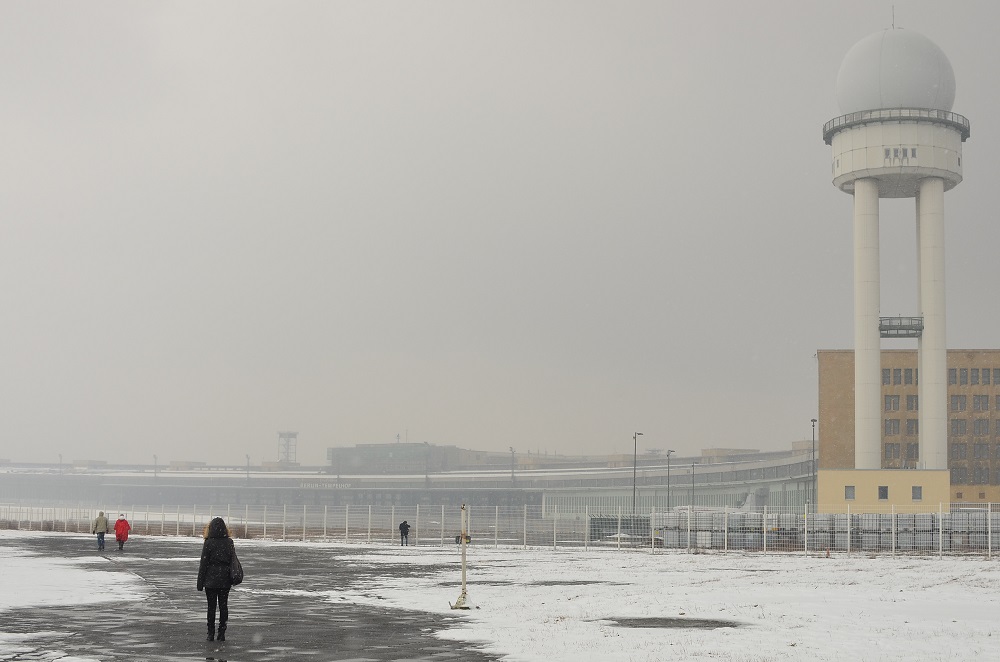
I reached Berlin in five days after managing around 80 kilometers a day – I could feel I had not been touring for a while! Upon arrival I was kindly hosted by Stefan, who is a regular summer visitor to my home region on the West Coast of South Africa. I took a day to revisit some sites in central Berlin, such as the old Tempelhof airport. For Easter, I was fortunate to meet up with friend Ute and her family, who ensured a memorable weekend for which I am most grateful. After five fantastic days in Berlin it was time to take to the road again. I was now heading for Eastern Europe; only days after more snow had fallen over Poland.

The Berlin Tempelhof, previously the city's airport and site of the Berlin Airlift.

Saturday, May 25, 2013

In the nick of time


I left Norway in the nick of time. Though my last night in Norway was fantastic with no wind or rain, things were different when I arrived in Hirtshals in Denmark. The cold weather that had been predicted had arrived. By the time I disembarked from the ferry in Hirtshals, the wind was howling followed by buckets of rain. While the next day seemed fine as I followed the bike trail down the west coast, I was in for a surprise. During my second night in Denmark it snowed. Not much, perhaps only an inch at the campsite where I over-nighted, but the landscape became whiter as I cycled towards the city of Thisted. The cycle path was covered in snow and only occasional stretches between major towns had been swept clear; the off-the-beaten-track trails would not be serviced for a while, if at all (it was after all early winter when no sane person would be cycling these routes!). 

The cycle route on Denmark's west coast actually follows the beach for about 10 km.

Trampled snow and ice making cycling a challenge.

The cold snap put a damper on my birding efforts in Denmark, as I grew increasing worried that I would not make it to Germany in time to catch a flight back to South Africa. I looked at my options of taking a bus or train should things turn out for the worst, and then just pedalled and hoped for the best. I passed the lakes of Vejlerne Nature Reserve in northern Jutland to get an impression of the area. Hundreds of ducks and large flocks of Lapwings occupied the open waters and frozen mudflats respectively. I could see the area had huge potential, given more time. I wished it was summer!

Just follow the cycle path and all will be fine!

Not the best conditions for cycling, especially when in a hurry!

A bird hide in the Vejlerne Nature Reserve in Denmark's northern Jutland.

I continued my slow progress along the snowed-up cycle paths, and occasionally sneaked onto the main roads when things got too tough. At the saltmarshes at Agger Tange, in the southern parts of National Park Thy, there were scores of birds including Coots, Mallards, Goldeneyes, Lapwings, Black-headed Gulls, Mute Swans, Oystercatchers, Whimbrels, Eurasian Curlews, Bar-tailed Godwits, and Greylag Geese. Raptors such as Common Buzzard and Rough-legged Buzzard were regularly seen.

A large Barnacle Goose flock on the grasslands of Denmark's west coast.

I was making good progress despite the snow, and fairly easily made my way to southern Denmark following the west coast. The snow eased up in places, and almost seemed to be non-existent, but never for too long. South of Fjand the grasslands held large migrating flocks of Barnacle Goose. On Romo Island the mudflats held Common Shelducks, and the occasional Brent Goose. Cycling around the island, I also found Skylark, Pink-footed Goose, Kestrel, Carrion Crow, Peregrine, Sparrowhawk, Rough-legged Buzzard, Twite, Pintail, and Snow Bunting. 

Sunrise in Denmark, with the snow easing up for a change.

After Romo it was only a four-day cycle to Hamburg; I had made it with a couple days to spare. I spent the spare time with family, who kindly hosted me until I caught my flight back to South Africa. Though my trip through Denmark was rushed, I hope to return someday in the summer! So after four and a half months since starting in Norway on 18 July, I had seen 183 bird species of which 80 were new to me (lifers). I had missed quite a few, but that means I have a reason to go back! For now I was looking forward to a hot summer in South Africa before returning for some more adventure cycle touring. 

A frozen pond in Germany.

Sunday, May 5, 2013

Lista, the final birding destination


Lista was my last birding destination in Norway, and perhaps one of the best. I arrived after sunset in the drenching rain, and managed to find a spot for my tent in a small pine plantation on the edge of Borhaug, one of the villages in the Lista region. Fortunately the rain came to a trickling end during the night, with the promise of good weather on the horizon. My first stop in the morning was the shop Natur og Fritid (http://www.naturogfritid.no), a mainly online shop for nature books and gear, but also open to the public. Vegard and his colleagues had heard about my trip from various local sources, so were sort of expecting me when I strolled in. While I browsed their impressive collection of bird books, a phone call was made to the nearby Lista Bird Observatory – they had kindly organised me accommodation! I also got some tips on where to find some specials in the area. 

Some flooded grassland near Lista Lighthouse.

Margrethe, the project manager at the bird observatory, kindly gave me access to the observatory’s accommodation for the few days that I spent there. It was a real luxury to be able to sleep under a roof and not have to worry about a wet tent and damp sleeping bag. The bird observatory, located adjacent to the Lista Lighthouse, undertakes regular mist netting and daily migration counts in the area surrounding the lighthouse. The observatory has databases spanning over 20 years, and serves to improve the understanding of bird populations and their trends over time by monitoring bird migrations (http://www.listafuglestasjon.no).

Lista Lighthouse in southern Norway.

One of the first lifers for me Greater White-fronted Goose; a small flock was foraging the pastures close to the sea shore near the lighthouse. Peregrine and White-tailed Eagle were regularly seen along the shore, while immature Goshawks were not uncommon. Occasionally Goshawks could be seen flying over the bays, just a couple of metres above the sea swells. 

Searching the beaches at Lista for unusual species.

My birding strategy at Lista was to walk the kelp strewn beaches where the best chance would be to find an unusual species, and to occasionally venture inland to explore the agricultural landscape and lakes. The beaches certainly delivered some good species for me, including Shorelark and a Richard’s Pipit. Both species had been recorded in the area during the preceding weeks, so I was bound to eventually find them. A single Ruddy Turnstone was also seen on the beach, as well as many Rock Pipits and a few Snow Buntings. 

A Richard's Pipit on the beach, a good bird to find in Norway.

The flat interior of Lista held numerous common species such as Yellowhammer, Greenfinch, Brambling and Chaffinch. Collared Doves were common around the houses, but were new for my Norwegian bird list. A pair of Common Cranes near the airport was a nice surprise, while I also enjoyed watching the radio-controlled model aircrafts buzzing about. Mixed flocks with up to four corvid species were also occasionally seen on the agricultural fields, and included Hooded Crow, Carrion Crow, Jackdaw and Rook.

Lista's beaches were exciting to explore, not to mentioning the great scenery.

In the small harbour at Borhaug there were Little Grebes, Red-throated Divers, Goldeneyes, Great Northern Diver, Long-tailed Ducks, Red-breasted Mergansers, Common and Velvet Scoters. Herring Gulls were continuously moving up and down the shoreline, and further out to sea there were Northern Gannets, Little Auks and the occasional Red-throated and Great Northern Diver flying by. On the lake Nesheimvatnet there were flocks of Greater White-fronted Goose, Greylag Goose, Tufted Duck and a single Smew. 

A male Long-tailed Duck in stunning breeding plumage in the harbour at Borhaug.

A thorough search of an area’s birds is never complete without a visit to the local sewage works, where I saw a small flock of Twite and a single Grey Wagtail. I thought the wagtail was a great addition to my bird list for the area, only to see four Grey Wagtails together the next day at a small piggery. Here I also found a single Common Redstart and Black Redstart, typically perched on vantage points such as buildings and farming implements.

The small woodlands near the beaches held the usuals such as Blackcap, Crested Tit, Goldcrest, Tree Sparrow, Wren, Waxwing, and Robin. I was hoping to find a flock of Parrot Crossbills but had no luck with these. Other species I was hoping for in the Lista area but did not find include Hen Harrier and Great Grey Shrike, but then one can’t have it all at once!

After four fantastic days in Lista I reluctantly left for Kristiansand, my departure point for Denmark. It was a two day cycle, and while there was not much time for birding, I did pick up a Hawk Owl which was a rather unusual species for the area. I also took the time to get to the southern point of Norway near the town of Farestad. At Kristiansand I boarded the ferry for Denmark, and with that ended my memorable four-month cycle of 5000 km through Norway. I was fortunate to have met old friends during this time, and have made new ones too – these were certainly the best moments of the trip. It had been a real adventure in a real country, with wide open spaces, woodland and forest as far as the eye can see, stately mountains and magnificent fjords. Would I cycle Norway again? Of course! But for now there are other areas of the world to explore…  

A Hawk Owl on the way to Kristiansand.

Near the southern tip of Norway, in the vicinity of Farestad.

On the ferry to Denmark, leaving the lights of Kristiansand behind.